


Medically reviewed by Eitan M. Kohan, MD
Two patients can come into my Paramus office with shoulders that look nearly identical on X-ray, both with bone grinding on bone. They leave with two different surgical plans. One gets a standard total shoulder replacement. The other gets a reverse. In most cases, the deciding factor isn’t the arthritis at all. It’s the rotator cuff. Understanding the choice between a reverse vs. total shoulder replacement starts with that one set of tendons, and it explains nearly everything about how the two surgeries and their recoveries differ.
Key Takeaways
- A standard, or anatomic, total shoulder replacement copies the shoulder’s normal ball-and-socket layout and depends on a working rotator cuff.
- A reverse shoulder replacement swaps the ball and socket so the deltoid muscle can lift the arm when the rotator cuff can no longer do its job.
- The health of the rotator cuff, more than age alone, tends to decide which implant fits a patient.
How a Standard Total Shoulder Replacement Works
The shoulder is a ball-and-socket joint. The ball is the top of the upper arm bone, and the socket, called the glenoid, is a shallow dish on the shoulder blade. The rotator cuff tendons keep the ball centered in that dish while the larger deltoid muscle moves the arm.
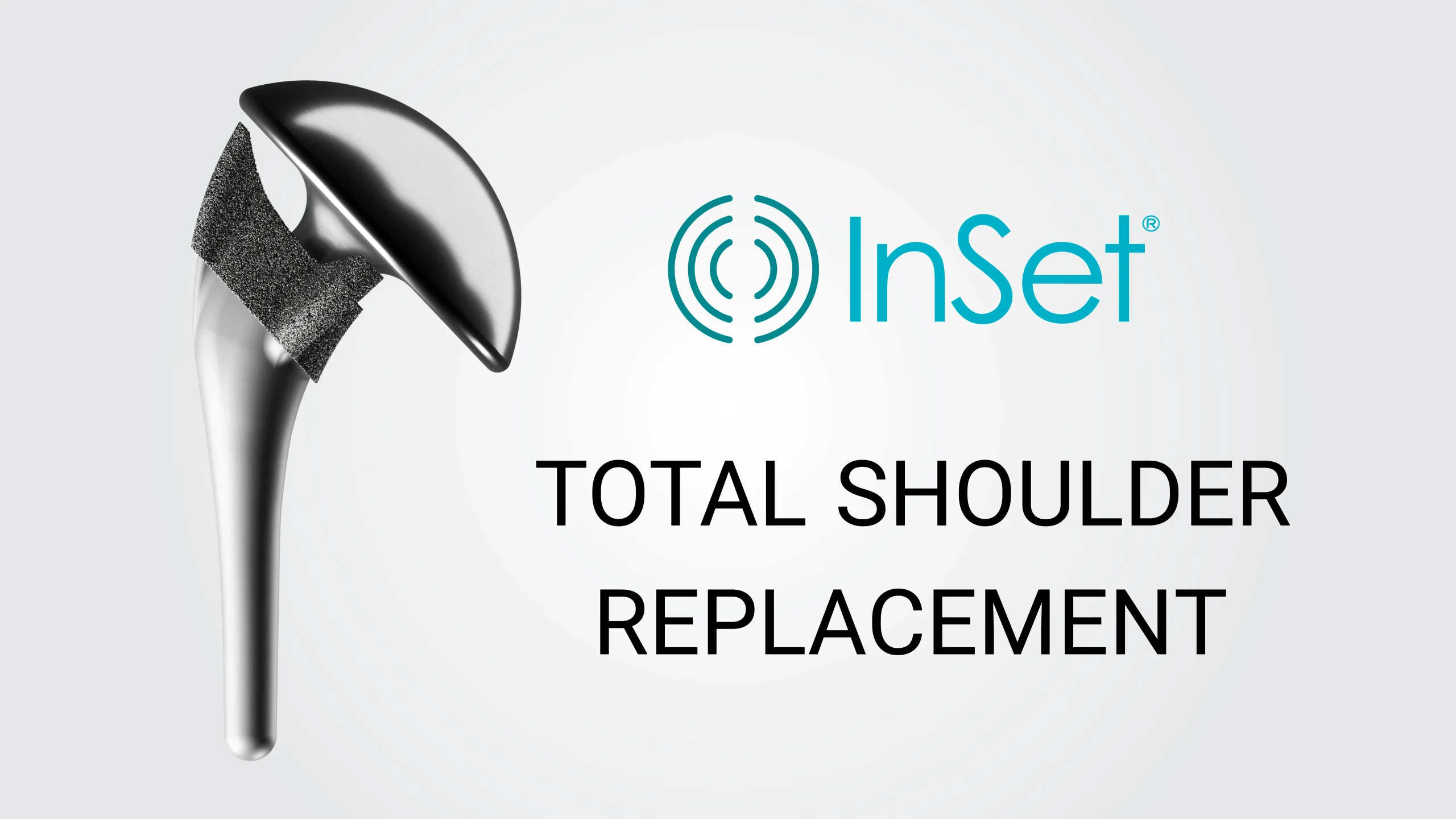
In an anatomic total shoulder replacement, I replace the worn ball with a metal ball on a stem, and I resurface the socket with a plastic component. The layout stays the same as nature designed it.
For my anatomic replacements, I use the InSet® Total Shoulder System. Most traditional sockets sit on top of the shoulder blade’s surface. The InSet® socket is recessed into a pocket of the patient’s own dense bone instead. That matters because socket loosening is one of the main long-term concerns with an anatomic replacement. When the ball pushes on the edge of a surface-mounted socket, it can rock it like a seesaw over thousands of arm movements, which engineers call the “rocking horse” effect.
Setting the component down into bone is designed to reduce that rocking. It also lets me use the InSet® socket in some shoulders where arthritis has worn the bone unevenly.
Either way, this surgery relies on a healthy rotator cuff. Without those tendons holding the ball in place, the new joint cannot work the way it should.
In a standard approach, I detach the subscapularis, one of the rotator cuff tendons at the front of the shoulder, to reach the joint, then repair it at the end of the case. For the right patient, a subscapularis-sparing shoulder replacement leaves that tendon attached the whole time.
I consider an anatomic replacement for:
- Osteoarthritis with an intact rotator cuff
- Arthritis after an old injury, when the cuff is still healthy
- Some inflammatory arthritis, if the tendons have held up
When the rotator cuff is healthy, I think an anatomic replacement is hard to beat for restoring a shoulder that moves and feels natural.
How a Reverse Shoulder Replacement Works
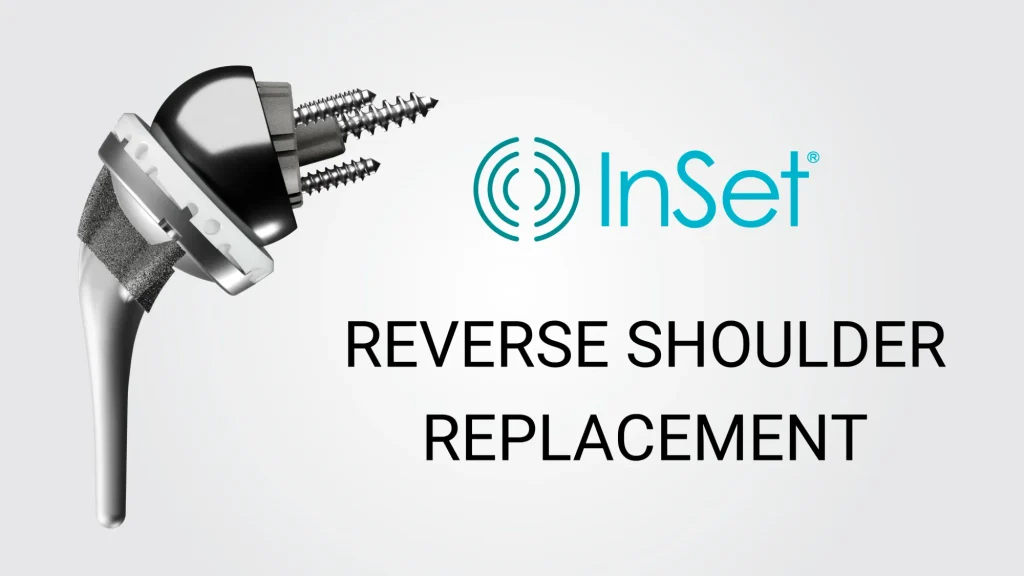
A reverse shoulder replacement switches the position of the ball and socket. A metal sphere is fixed to the shoulder blade, and a plastic socket is attached to the top of the upper arm bone. That change moves the joint’s center of rotation and puts tension on the deltoid. The result is a shoulder the deltoid can raise, even when the rotator cuff is torn beyond repair.
A reverse replacement may be recommended for:
- Cuff tear arthropathy, the combination of arthritis and a large, long-standing rotator cuff tear
- Massive rotator cuff tears that cannot be repaired, even without much arthritis
- Complex fractures of the upper arm bone in older adults
- As a revision to an earlier shoulder replacement
- Some arthritis with an intact cuff, when the socket is badly worn or misshapen
In my view, the reverse is one of the biggest advances in shoulder surgery in the past few decades. Patients who were once told to live with a shoulder they couldn’t use now have a real option.
Who Gets Which Implant
The rotator cuff comes first. I look at its condition on MRI and on exam, and a patient who can’t raise the arm despite good pain control is telling me something about the tendons. If the cuff is intact and working, an anatomic replacement is on the table. If it is torn beyond repair, or so thin that it is likely to fail, a reverse likely makes more sense.
Bone matters next. Some arthritic shoulders wear the socket unevenly, tipping it backward. A CT scan lets me measure that wear and plan implant position before surgery. Severe socket wear may push the decision toward a reverse.
How Recovery Differs
The broad arc of recovery is similar for both surgeries. My patients typically wear a sling for the first one to two weeks after either replacement, and most are fully out of it by six weeks. If I’m able to do a subscapularis-sparing replacement, many patients can come out of the sling within a few days, once the nerve block wears off. Initial recovery takes around four to six weeks. Meaningful functional gains can come between three and six months, and strength and endurance can keep building for up to a year or longer.
The details are where they differ.
After a standard total shoulder replacement, the early priority is protecting the subscapularis repair. That tendon was detached and sewn back, and it needs time to heal. Early therapy limits how far the arm rotates outward and avoids pushing or lifting with that arm. Later, strengthening focuses on the rotator cuff muscles.
After a reverse shoulder replacement, the early concern shifts to stability. In the first weeks, patients avoid the combined motion of reaching behind the back with the arm pulled inward, like tucking in a shirt or pushing up from a chair with the hand behind the body. Strengthening later centers on the deltoid, since that muscle now does the lifting.
Both groups benefit from help at home for the first few weeks. Neither recovery is a race. I would rather see steady progress over six months than a rushed return in six weeks.
Motion, Strength, and Long-Term Expectations
An anatomic replacement may restore more natural rotation, including reaching behind the back. A reverse tends to do well at restoring overhead lifting, but rotation, especially reaching behind the back, may be more limited for some people. That matters for tasks like fastening a bra, reaching a back pocket, or personal hygiene. I bring it up before surgery so it is part of the decision.
Implant design is working to narrow that gap. For my reverse replacements, I use the InSet® Reverse Shoulder System, which was built around one question: how do you make a reverse behave more like an anatomic shoulder? Its answer is lateralization. Both the ball on the shoulder blade and the socket on the arm bone sit a little farther out from the body, which is intended to help the remaining muscles work better and improve rotation.
For activity, the guidance is similar. Low-impact pursuits like golf, swimming, and walking are generally well tolerated after full recovery. Contact sports and heavy lifting may be discouraged to protect the implant.
What I See in My Patients
Many patients come in assuming a reverse is a lesser surgery or a backup plan. I understand why, since most people hear about a “regular” shoulder replacement first. In reality, a reverse is simply the right tool for a shoulder that has lost its rotator cuff.
Among my reverse patients in Bergen County, many haven’t lifted the arm above shoulder height in years. For them, reaching a kitchen cabinet, washing their hair, or getting a coffee mug off a high shelf without pain matters more than any number on a range-of-motion chart.
My anatomic patients tend to be a bit younger and more active, and many ask about getting back to golf, tennis, or the gym. Matching the implant to what each patient wants to do is a large part of how I plan these operations.
My Approach to Treatment
I don’t choose an implant because it’s newer or because a patient read about it online. I choose it based on the rotator cuff, the bone, and the patient’s goals. Every replacement I plan starts with a detailed exam, an MRI or ultrasound look at the cuff when needed, and a CT scan to understand the socket.
I walk each patient through both options, even when one is clearly the better fit, so they understand why.
I also teach orthopedic trainees through Hackensack Meridian School of Medicine, and the lesson I repeat most about shoulder replacement is that the rotator cuff, not the X-ray, drives much of the implant choice. It is the same lesson I apply to every patient who comes through my Paramus, Franklin Lakes, and Montvale offices.
Summary
A standard total shoulder replacement rebuilds the shoulder in its natural layout and depends on a working rotator cuff. A reverse shoulder replacement flips the ball and socket so the deltoid can take over when the cuff can’t do its job. The rotator cuff and the socket bone, more than age alone, guide the choice. Recovery follows a similar timeline for both, but early precautions, rehab focus, and final motion can differ.
If you have been told you need a shoulder replacement, ask which type is planned and what your rotator cuff looks like. Bring your MRI or CT to your visit if you have one. If you are in Bergen County and want to talk through your options, request an appointment at my Paramus, Franklin Lakes, or Montvale office.
Frequently Asked Questions
Is a reverse shoulder replacement a worse surgery than a total shoulder replacement?
No. A reverse is a different design for a different problem. It is built for shoulders where the rotator cuff is torn or no longer working, which a standard replacement can’t handle well. For those patients, a reverse may be the best option.
Which shoulder replacement has a faster recovery?
The broad timelines are similar. Most patients are in a sling for the first one to two weeks and fully out of it by six weeks, with meaningful gains between three and six months and strength still building for up to a year or longer. Early goals differ: a standard replacement protects the subscapularis repair, while a reverse focuses on avoiding positions that could risk dislocation.
How long does a reverse shoulder replacement last?
Many reverse shoulder replacements last for years, and current designs continue to improve. How long an individual implant lasts can depend on activity level, bone quality, and how the implant is positioned. Following long-term activity guidance helps protect it.
Am I too young for a reverse shoulder replacement?
Age alone doesn’t rule it in or out. Reverse replacements are now used in a wider range of patients than in the past, especially when the rotator cuff can’t be repaired. For younger patients with a healthy cuff, an anatomic replacement is usually the first option to consider.