


Medically reviewed by Eitan M. Kohan, MD
When I plan a rotator cuff repair or a shoulder replacement, I almost always bring up a structure most patients have never heard of. The long head of the biceps tendon runs from the top of the shoulder socket down the front of the arm, and it can be a quiet source of pain for years. Deciding what to do with the long head of the biceps tendon is part of nearly every rotator cuff repair and shoulder replacement I plan. You’ll hear about that decision in my office, well before the day of surgery.
Key Takeaways
- The long head of the biceps tendon attaches inside the shoulder joint, and it can become inflamed, frayed, or unstable alongside rotator cuff tears and arthritis.
- The two main surgical options are tenotomy, which releases the tendon, and tenodesis, which reattaches it lower on the arm bone.
- Neither option is right for everyone. Age, activity level, arm contour, and the main procedure all shape the choice.
What the Long Head of the Biceps Does
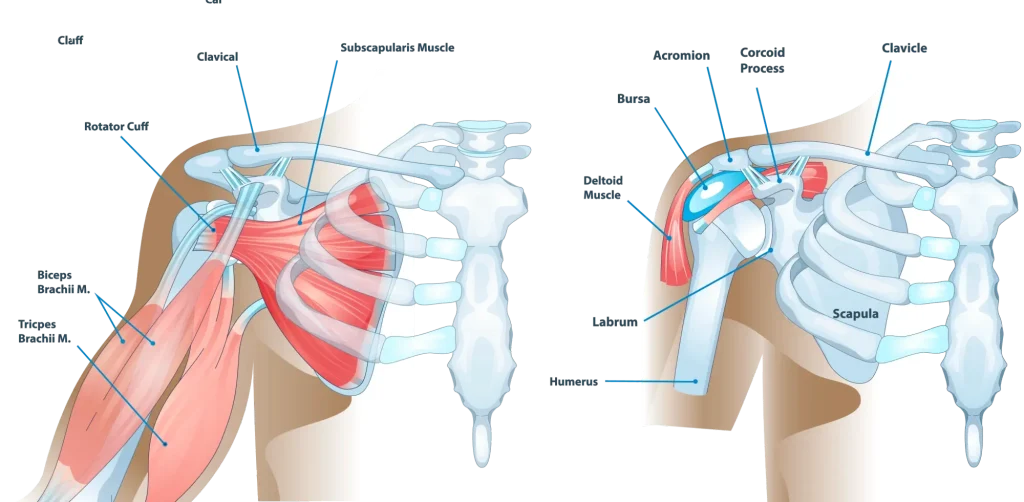
The biceps muscle has two tendons at the shoulder, which is where the name comes from. The short head attaches to the coracoid, a small hook of bone at the front of the shoulder blade. The long head takes a longer route. It starts at the top of the socket, right where the labrum attaches, then turns sharply and travels down a groove in the front of the upper arm bone before joining the muscle.
That sharp turn matters. The tendon slides back and forth with every arm movement, and over decades it takes a beating.
Its exact job at the shoulder is still debated, and it appears to play a fairly limited role in how the shoulder works. In my view, that limited role is why releasing the tendon in the right patient costs so little.
Why the Biceps Tendon Causes Shoulder Pain
Biceps problems rarely travel alone. The tendon sits right next to the rotator cuff, and the sling of tissue that holds it in its groove is partly made of cuff tendon. When the cuff tears, especially the subscapularis at the front of the shoulder, the biceps can slip out of its groove and rub against bone.
The main biceps problems I treat at the shoulder include:
- Biceps tendonitis, irritation and thickening from repetitive use or age-related wear
- Partial tears and fraying, which I see all the time alongside a rotator cuff tear
- Instability, where the tendon slides in and out of its groove
- SLAP tears, where the labrum tears at the spot the biceps anchors
Biceps pain usually sits at the front of the shoulder. Many patients point to one tender spot just below the front of the joint, and the ache can travel down toward the muscle. Lifting with the palm up, reaching overhead, or reaching behind the back can bring it on.
SLAP tears deserve a separate note. They show up more in overhead athletes like pitchers and swimmers, and I cover how they compare with cuff injuries in my post on labral tears vs. rotator cuff tears. I think the biceps is one of the most subtle pain sources in the shoulder, because it can hide behind a more obvious rotator cuff tear on an MRI.
Nonsurgical Treatment Comes First
When the biceps is the main problem and there is no major structural tear, surgery is rarely my opening move. Rest from the aggravating activity, anti-inflammatory medication, and physical therapy to improve shoulder mechanics can settle many cases. An injection around the tendon may calm inflammation. It also helps confirm that the biceps is truly the pain source.
Surgery for the biceps comes up when symptoms hang on for months despite good care, or, far more likely, when I am already going into the shoulder to treat something else.
What Happens to the Biceps During Shoulder Surgery
Most biceps procedures are part of a larger operation. During arthroscopy for a torn rotator cuff, I look directly at the tendon with the camera. Fraying, a partial tear, or a tendon that has slipped out of its groove can explain pain that the MRI suggested came from the cuff alone.
A replacement is a different setting. During a total shoulder replacement, the long head of the biceps tendon is commonly released or reattached, because a worn tendon left behind can keep causing pain after the new joint is in place.
Whatever the main surgery, there are two ways to handle the tendon.
Biceps Tenotomy
A tenotomy releases the tendon from its attachment at the top of the socket. The tendon then retracts down the arm and scars in place along its groove.
Because the muscle can slide slightly lower, some patients develop a rounded bulge in the lower upper arm, nicknamed a “Popeye” sign. A smaller group notices cramping in the biceps muscle with heavy or repetitive use, which may ease over the first several months.
Biceps Tenodesis
A tenodesis also detaches the tendon from the socket, but then reattaches it to the upper arm bone. Depending on the case, the new attachment sits near the top of the groove or lower down near the chest muscle tendon, through a small incision. The fixation may use a screw, an anchor, or a suture button.
The muscle stays close to its normal position, which preserves arm contour and may reduce cramping. The trade-off is that the new attachment has to heal to bone. That means a period of protecting it, and a small added risk tied to the fixation itself. I’m skeptical of any one-size-fits-all rule here. Both procedures have solid track records, and the better choice depends on the person in front of me.
How I Choose Between Tenotomy and Tenodesis
I make this decision with the patient, and I document the plan before surgery so nobody wakes up to an unexpected change. A few questions guide the conversation:
- How active are you, and do you do heavy lifting or repetitive forearm twisting at work or the gym?
- Would a change in the shape of your arm bother you?
- What else is being done during the surgery, and how demanding will that recovery already be?
For a younger, active patient in Bergen County who lifts weights or works with their hands, I may lean toward tenodesis. For an older patient having a reverse shoulder replacement, where the priorities are pain relief and getting back to daily tasks, a tenotomy may make more sense.
Sometimes the final call happens in the operating room. If the tendon looks healthier than the MRI suggested, or more damaged, I may adjust within the plan. You’ll know if that’s a possibility ahead of time.
What I See in My Patients
Because my practice covers both the shoulder and the elbow, I see the biceps from both ends. At the elbow, a distal biceps rupture in an active person usually calls for surgical reattachment, since that tendon does the heavy work of bending the elbow and turning the forearm. The long head at the shoulder is a different story.
When the long head tears on its own, more often than not in an older patient with a worn rotator cuff, most people are left with a bulge and some bruising but little change in daily function. Patients at my Paramus, Franklin Lakes, and Montvale offices sometimes arrive after a sudden pop in the upper arm, worried they need emergency surgery. In most of those cases, the more important question is what the rotator cuff looks like, because a spontaneous long head rupture can travel with a cuff tear.
The other thing I hear constantly is some version of “If you cut it, won’t I be weak?” For everyday tasks, many patients report no noticeable difference after a tenotomy. The people most likely to notice are those who do repetitive forearm rotation all day, such as turning a wrench or screwdriver. That’s a big part of why I ask about work and hobbies before we decide.
Recovery After a Biceps Procedure
In most cases, the main operation sets the pace of recovery, not the biceps. After a rotator cuff repair, for example, sling time and physical therapy follow the cuff repair timeline, which is the slower of the two.
When a tenodesis is done, the new attachment needs protection while it heals to bone. Protocols commonly limit resisted elbow bending and heavy lifting with that arm for about six weeks, then build strength gradually. Gentle elbow motion without resistance is generally encouraged early to prevent stiffness.
After a tenotomy, nothing has been reattached that needs protecting, so biceps-specific restrictions tend to be lighter. Any restrictions you have will come from the main procedure. Some patients notice cramping or fatigue in the biceps muscle for the first few months as the tendon scars in place.
Summary
The long head of the biceps tendon is a small structure with an outsized role in shoulder pain. It can become irritated or damaged alongside rotator cuff tears and arthritis. During surgery, it is typically either released with a tenotomy or reattached with a tenodesis. Each option has trade-offs, and the right choice depends on your age, activity, and the main procedure you need.
If surgery is on your calendar, ask which biceps option is planned and why before the day of the operation. If you have front-of-shoulder pain that hasn’t settled with rest and therapy, request an appointment at my Paramus, Franklin Lakes, or Montvale office, and we can look at the biceps and the rotator cuff together.
Frequently Asked Questions
Will I lose strength if my biceps tendon is cut?
Many patients don’t notice a meaningful loss of everyday strength after a tenotomy. Some studies show a small drop in forearm rotation strength, which matters most for people who twist or turn tools all day. If that describes your work or hobbies, a tenodesis may be the better fit.
What is a Popeye deformity, and should I worry about it?
A Popeye deformity is a rounded bulge in the lower part of the upper arm. It forms when the biceps muscle slides down after the long head is released or tears. It is a cosmetic change and generally not painful.
Can a torn long head of the biceps heal on its own?
A complete tear of the long head does not reattach on its own, but many people function well without surgery once the pain and bruising settle. Partial tears and tendonitis may improve with rest, therapy, and sometimes an injection.
Is the biceps always treated during shoulder replacement?
Not always, but it is common. During a total shoulder replacement, the long head of the biceps tendon is released or reattached in many cases, since a worn tendon left in place can remain a source of pain. I discuss the plan for the biceps with each patient before surgery.