


Elbow bursitis is a common elbow condition I see in my practice as an orthopedic surgeon specializing in shoulder and elbow disorders. While it can be uncomfortable, and sometimes a little unsettling to look at, many cases respond well to treatment, and surgery is rarely needed. Whether your symptoms came on suddenly or built up over time, understanding what is happening and why can make the whole experience feel far less intimidating. In this post, I’ll cover what elbow bursitis actually is, what tends to cause it, how we typically diagnose it, and what your treatment options may look like.
Key Takeaways
- Elbow bursitis occurs when the small, fluid-filled sac at the tip of the elbow becomes inflamed and swells.
- Common causes include prolonged pressure on the elbow, direct trauma, bacterial infection, and certain underlying medical conditions.
- Many cases can be managed with conservative treatments such as rest, protective padding, ice, anti-inflammatory medications, and aspiration (draining the fluid).
- Surgery is rarely needed but may be considered for chronic or recurrent cases that do not respond to non-surgical management.
What Is Elbow Bursitis?
To understand elbow bursitis, it helps to know a little bit about the anatomy of the elbow. The tip of the elbow, that bony point you can feel when you rest your arm on a table, is called the olecranon. Sitting directly between the skin and this bony prominence is a small, fluid-filled sac called the olecranon bursa.
Under normal circumstances, the bursa is nearly flat and contains only a tiny amount of fluid. Its job is to reduce friction and allow the skin to glide smoothly over the underlying bone. Most people never notice it because, when healthy, it simply does its job quietly in the background.
When the bursa becomes irritated, whether from repetitive pressure, a sudden injury, infection, or an inflammatory condition, it can fill with excess fluid and swell considerably. This is what we call elbow bursitis, also referred to as olecranon bursitis. In some cases, the swelling can become quite pronounced, growing to the size of a golf ball or larger.
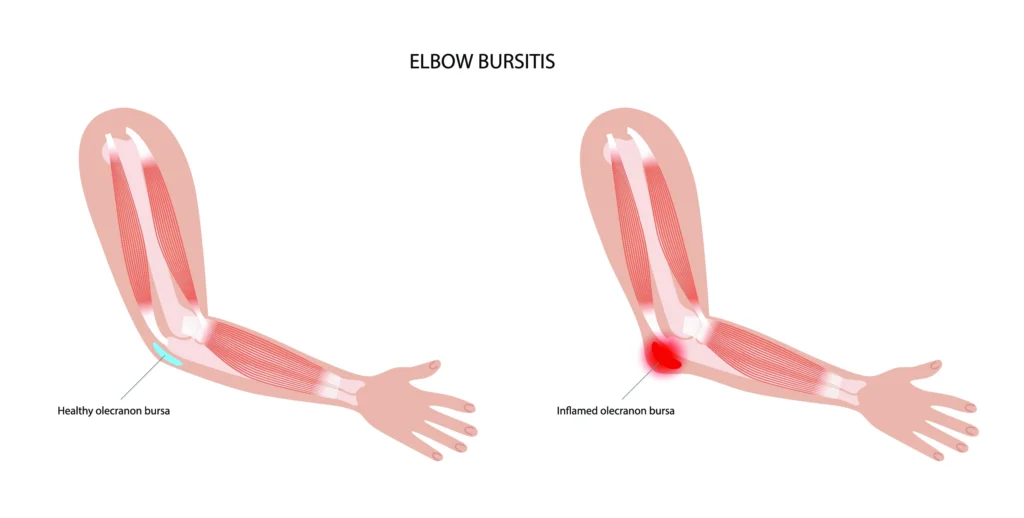
The elbow joint itself is typically not directly involved, and many patients retain their range of motion, although this can vary depending on the severity of swelling. Oftentimes there is minimal pain associated with bursitis. Elbow bursitis can affect people of all ages and activity levels, from desk workers to athletes to individuals with certain systemic health conditions. Identifying the underlying cause is an important step toward choosing the most appropriate treatment.
Causes of Elbow Bursitis
Several factors can lead to the development of elbow bursitis. Understanding the root cause of your symptoms helps guide treatment decisions.
Prolonged Pressure on the Elbow
One of the most common causes is repeatedly leaning or resting on a hard surface. People who work at desks, workbenches, or assembly lines and habitually rest their elbows on hard edges may gradually irritate the olecranon bursa over time. This pattern has even earned a nickname, “student’s elbow,” because it tends to occur in people who spend long hours hunched over a desk with their elbows bearing their weight.
Trauma or a Direct Blow
A sudden, forceful impact to the tip of the elbow, from a fall, a collision during sport, or a direct hit, can cause the bursa to fill with blood or fluid quickly. This type of acute injury can produce visible swelling within hours. Athletes in contact sports are particularly susceptible to this type of bursitis.
Infection
When bacteria enter the bursa through a small break in the skin, the bursa can become infected. This is known as septic bursitis, and it tends to produce more pronounced symptoms, including notable redness, warmth, pain, and sometimes fevers. Septic bursitis requires different treatment from non-infectious forms and should be evaluated promptly.
Underlying Medical Conditions
Certain systemic conditions can make the bursa more susceptible to inflammation. Gout, rheumatoid arthritis, and other inflammatory disorders are among the conditions that may trigger or worsen elbow bursitis. In these cases, managing the underlying condition is an important part of preventing recurrent episodes.
Repetitive Motion
Some occupations and activities involve repeated elbow motion, which may contribute to irritation of the bursa over time. Plumbers, mechanics, and certain athletes may be at elevated risk based on the physical demands of their work or training.
Symptoms of Elbow Bursitis
The symptoms of elbow bursitis can vary depending on the underlying cause and how long the condition has been present. In many cases, the first sign is visible swelling at the back of the elbow, often without significant pain in the early stages. Over time, however, the area may become increasingly tender and difficult to ignore.
Common symptoms include:
- Swelling at the Elbow Tip: The most recognizable sign is a soft, round lump at the olecranon. The swelling can range from subtle to quite prominent and typically has a fluid-like, squishy consistency when pressed.
- Pain and Tenderness: If there is no pressure on the elbow, often there is no associated pain. However, the back of the elbow may be sore to the touch, especially when pressure is applied directly or when the arm is fully bent.
- Redness and Warmth: These symptoms are more common in cases involving infection or active inflammation. The overlying skin may appear flushed and feel noticeably warm.
- Limited Comfort with Movement: While the elbow joint itself is generally not affected, significant swelling can make it uncomfortable to fully flex or extend the arm during daily activities.
- Fever and General Illness: When infection is the cause, systemic symptoms such as fever, chills, or a general feeling of being unwell may develop alongside the local elbow symptoms. These signs may indicate septic bursitis and call for prompt evaluation.
One thing I often remind patients is that the size of the swelling does not always correspond to the level of pain. Some people with quite large bursae report minimal discomfort, while others find smaller amounts of swelling quite painful. Every case is a little different.
Diagnosis
Diagnosing elbow bursitis typically starts with a thorough physical examination and a detailed conversation about your symptoms, activity level, and medical history. During the physical exam, I will assess the size and texture of the swelling, check for tenderness and warmth, and evaluate the range of motion at the elbow joint.
In many cases, the clinical evaluation may be sufficient to make a diagnosis, though additional testing may be needed in some situations. X-rays can help rule out other conditions that might be contributing to your symptoms. Ultrasound imaging can provide a closer look at the fluid within the bursa and help evaluate the surrounding soft tissues.
When there is concern that the bursitis may be infected, aspiration may be a diagnostic step. Using a small needle, fluid is withdrawn from the bursa and sent to a laboratory for analysis. The results can confirm or rule out infection and, in some cases, identify whether conditions like gout are contributing to the inflammation. Getting this information early is important because septic bursitis and non-infectious bursitis require meaningfully different treatment approaches. An experienced elbow specialist can evaluate your specific situation and help determine which diagnostic steps are most appropriate for you.
Treatment Options for Elbow Bursitis
Treatment for elbow bursitis depends on what is causing the condition, how severe the symptoms are, and whether infection is involved. The majority of cases respond well to non-surgical treatment, and surgery is typically reserved for situations where conservative options have not provided adequate relief over an extended period.
Conservative Treatment
- Activity Modification and Protective Padding: One of the first steps in managing elbow bursitis is reducing or eliminating activities that place direct pressure on the elbow. Using a padded elbow sleeve or cushion can help protect the bursa and reduce ongoing irritation during daily activities and work.
- Ice Application: Applying an ice pack to the swollen area for 15 to 20 minutes at a time, several times per day, can help reduce swelling and discomfort, particularly in the early stages of the condition.
- Nonsteroidal Anti-Inflammatory Drugs (NSAIDs): Over-the-counter NSAIDs such as ibuprofen or naproxen may help manage pain and reduce inflammation. It is important to take these medications as directed and to consult with your doctor if you have any medical conditions that could affect their use.
- Aspiration: In rare cases, I may recommend drawing the fluid out with a needle. It is worth noting that fluid often will reaccumulate after aspiration, particularly if the underlying cause is not addressed.
- Antibiotics: When septic bursitis is confirmed or strongly suspected, antibiotic therapy is a necessary and important part of treatment. Treatment may include oral or intravenous antibiotics depending on severity, along with appropriate medical follow-up.
Surgical Treatment
Surgery for elbow bursitis is not commonly needed, but it may be considered in cases that become chronic, recurrent, or have not responded to conservative measures over time. The procedure, called a bursectomy, involves removing the inflamed bursa entirely. Many patients recover well and are able to return to normal activities within several weeks following the procedure. Over time, the body will naturally form a new, healthy bursa to replace the one that was removed.
Summary
Elbow bursitis is a relatively common condition that, while sometimes alarming in appearance, is generally manageable with the right approach. The swelling occurs when the small, fluid-filled sac at the tip of the elbow becomes irritated and inflamed, typically due to prolonged pressure, a direct injury, infection, or an underlying medical condition. Many patients respond well to conservative treatment, including activity modification, protective padding, ice, NSAIDs, and aspiration. Surgery is rarely necessary but may be considered for cases that become chronic or recurrent.
Frequently Asked Questions
Is elbow bursitis the same as tennis elbow?
No, these are two different conditions. Elbow bursitis involves inflammation of the olecranon bursa, the fluid-filled sac at the tip of the elbow. Tennis elbow (lateral epicondylitis) involves inflammation of the tendons on the outer side of the elbow. While both can cause elbow discomfort, they affect different structures and may require very different treatment approaches.
How long does elbow bursitis take to heal?
Recovery time can vary quite a bit depending on the cause and severity. Mild, non-infectious cases may improve within a few weeks with conservative management. More significant or persistent cases, especially those requiring multiple aspirations or treatment for infection, can take several months to fully resolve.
Is elbow bursitis surgery risky?
Bursectomy is generally considered a low-risk procedure, and most patients tolerate it well. As with any surgery, there are potential complications to be aware of, but serious adverse outcomes are uncommon. Your surgeon can walk you through the specific risks, what to expect during recovery, and whether surgery is the right option for your particular situation.