

The pain from a shoulder dislocation tends to be intense, and the aftermath can feel just as frustrating, especially when your shoulder keeps feeling loose or unstable afterward. One of the most common reasons this happens is something called a Bankart tear. Understanding what a Bankart tear is, how it happens, and what can be done about it may help you feel more informed and in control as you navigate your next steps.
Key Takeaways
- A Bankart tear involves damage to the labrum, the ring of cartilage that helps stabilize the shoulder joint.
- The injury most commonly occurs during a shoulder dislocation and may also develop in some individuals due to repetitive overhead stress over time.
- Common symptoms include shoulder instability, pain, and an unsettling feeling that the shoulder might “slip out.”
- Treatment ranges from physical therapy and rehabilitation to surgery, depending on the severity.
Understanding the Shoulder Joint
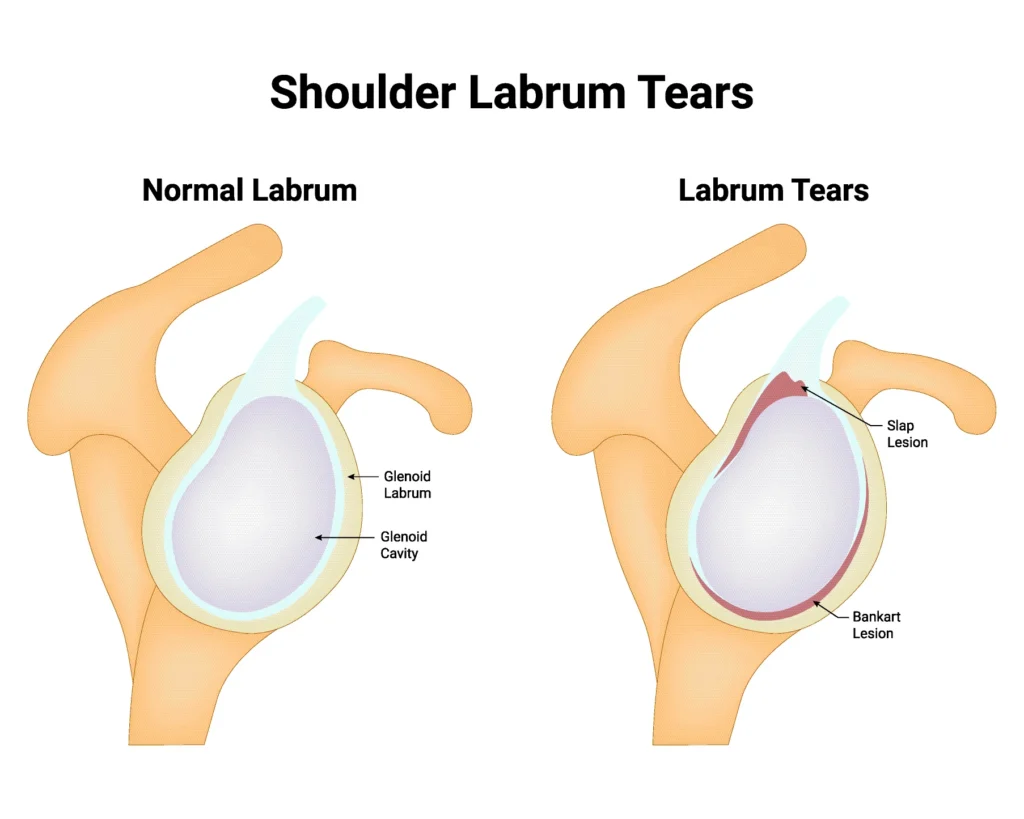
The shoulder joint works by having the head of the humerus, or upper arm bone, sit inside a shallow cup-shaped socket in the shoulder blade, called the glenoid. Because that socket is relatively shallow (think like a golf ball sitting on a golf tee), the shoulder depends heavily on surrounding soft tissues to hold everything in place and maintain stability.
One of those key structures is the labrum. The labrum is a ring of tough, fibrous cartilage that lines and deepens the rim of the glenoid socket (like a bumper around the golf tee). It also anchors several important ligaments that help keep the joint secure. When the labrum is healthy and intact, it does its job quietly in the background, allowing free movement without instability. When it’s damaged, the shoulder can become significantly less stable, sometimes right away, sometimes gradually over time.
What Is a Bankart Tear?
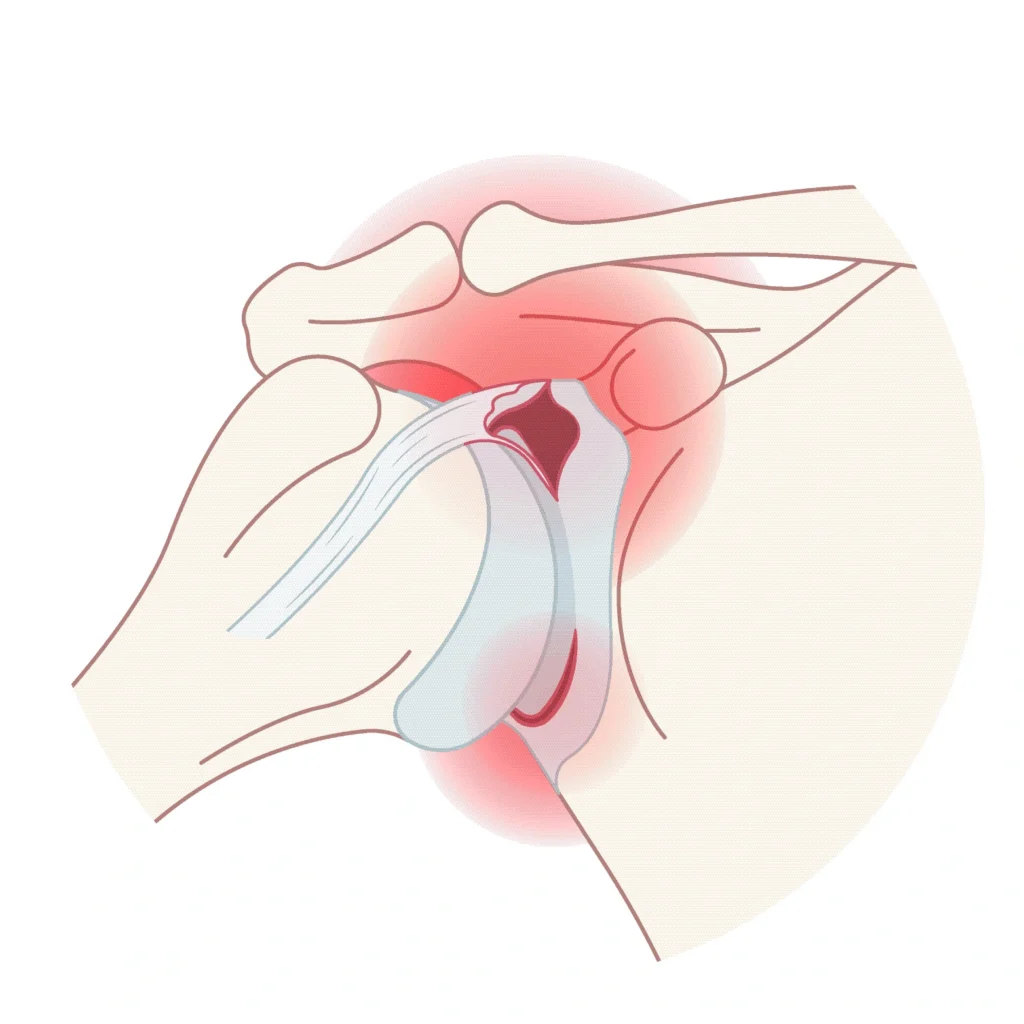
A Bankart tear is an injury to the front-lower portion of the labrum, specifically the part of that cartilage ring that sits at the anterior-inferior aspect of the glenoid socket. This area plays a particularly important role in preventing the shoulder from dislocating forward, which is the most common direction of dislocation. When the tissue in this region tears, the shoulder may lose a meaningful amount of its natural stability.
There’s also a variation known as a bony Bankart lesion. In some cases, when the shoulder dislocates forcefully, a small fragment of bone breaks away from the edge of the glenoid socket along with the labrum (turning the golf tee into a broken golf tee). This bony variant can make the injury more structurally complex and may influence which treatment approach is most appropriate.
What Causes a Bankart Tear?
Most Bankart tears are traumatic in nature, meaning they develop as the result of a sudden, forceful event. The most common cause is a shoulder dislocation, which occurs when the humeral head is forced out of the glenoid socket entirely (the golf ball falls off the tee). This typically happens during:
- Contact sports like football, hockey, or rugby, where a direct impact can drive the arm out of position
- Falls, particularly landing hard on an outstretched arm
- Overhead throwing sports like baseball or volleyball, where repetitive stress can gradually wear down the labrum over time
- Activities involving sudden, extreme arm movements
It’s important to note that a Bankart tear doesn’t always require a full dislocation to develop. Some individuals, particularly overhead athletes, may develop labral tears through repetitive microtrauma that accumulates over many months or even years. The shoulder can start to feel loose or unreliable long before a true dislocation ever occurs.
Recognizing the Symptoms
Symptoms of a Bankart tear can vary depending on how severe the injury is, how long it’s been present, and whether other structures were affected at the same time.
Shoulder instability: Patients frequently describe a feeling that their shoulder is “loose,” that it might slip out during certain movements, or that it simply feels unreliable. Some people experience subluxations, where the shoulder almost comes out but returns on its own.
Pain: The pain associated with a Bankart tear may be felt deep in the front of the shoulder. It tends to flare up with reaching overhead, reaching across the body, or placing the arm behind the back. It can be sharp and sudden with specific movements, or more of an aching discomfort that lingers.
Apprehension: Many patients develop a sense of anxiety or hesitation around specific arm positions, particularly when the arm is raised and rotated outward. This is sometimes called “apprehension.”
Reduced range of motion or strength: Some patients notice they can’t move their arm as freely as before, or that certain movements feel weaker than expected. This may be partly related to guarding, or unconsciously holding back due to fear of pain or another dislocation event.
Clicking or catching sensations: A damaged labrum can sometimes produce mechanical symptoms, like a clicking, catching, or grinding feeling during shoulder movement.
How Is a Bankart Tear Diagnosed?
Diagnosing a Bankart tear typically involves a combination of clinical evaluation and imaging. When you visit an experienced shoulder specialist, they’ll likely begin with a thorough medical history and physical examination. Your doctor may ask about how the injury occurred, what your symptoms feel like day to day, and whether your shoulder has ever dislocated or felt unstable before.
During the physical exam, your doctor may perform specific tests designed to assess shoulder stability and reproduce symptoms commonly associated with labral damage. These tests can offer valuable diagnostic information even before imaging is ordered.
Imaging tests may also be ordered. X-rays are often taken first to evaluate the bony structures and rule out fractures. However, soft tissue structures like the labrum don’t appear on standard X-rays, so an MRI may be needed to assess the labrum and surrounding ligaments more clearly. A CT scan may also be helpful in certain cases, particularly when a bony Bankart lesion is suspected and the extent of bone loss needs to be more precisely quantified.
Treatment Options for a Bankart Tear
Treatment depends on several key factors: how severe the tear is, the patient’s age and activity level, how many times the shoulder has dislocated, and whether there is any associated bone loss.
Non-Surgical Treatment
For some patients, particularly those with a first-time dislocation, lower activity demands, or less significant labral damage, a conservative, non-surgical approach may be a reasonable starting point.
Conservative treatment typically begins with a period of immobilization, often using a sling to allow the acute injury to settle. This may be followed by a structured physical therapy program aimed at strengthening the muscles surrounding the shoulder, particularly the rotator cuff, to help compensate for the reduced stability from the damaged labrum. Improving neuromuscular control, essentially training the shoulder to better sense its position and respond to dynamic movement, is also commonly a key component of rehabilitation.
That said, non-surgical treatment does have limitations. For athletes who want to return to high-demand sports, or for patients who have already experienced multiple dislocations, surgery may be considered even for patients who have only dislocated one time.
Surgical Treatment
When surgery is recommended, the most common procedure for a Bankart tear is a Bankart repair, typically performed arthroscopically. Arthroscopic surgery is a minimally invasive approach in which a small camera and specialized instruments are inserted through tiny incisions in the shoulder.
During the procedure, the torn labrum is carefully reattached to the rim of the glenoid socket using small anchors, aiming to restore the labrum to its anatomical position and re-establish stability. Associated ligaments that may have been stretched or damaged may also be addressed as part of the repair.
For cases involving significant bone loss, particularly those with a bony Bankart lesion, a different procedure may be considered, such as a Latarjet procedure or distal tibia allograft. This technique involves transferring a small piece of bone from another part of the shoulder or a cadaver with the goal of restoring the glenoid’s structure and providing additional stability. Your doctor will discuss all relevant surgical options based on what your exam findings and imaging reveal.
When Should You See a Doctor?
If you’ve experienced a shoulder dislocation, even one that was put back in place at the emergency room or seemed to “pop back” on its own, scheduling a follow-up evaluation with a shoulder specialist is important. Many patients assume that once the shoulder is back in position, the issue is fully resolved. The underlying labral damage that may have occurred during the dislocation can persist, however, and leave the shoulder vulnerable to ongoing instability or repeat injuries.
Consider seeking an evaluation if you experience any of the following:
- A persistent feeling that your shoulder is loose or may slip out during everyday activities
- Recurrent subluxations or full dislocations
- Shoulder pain that lingers after an injury, especially with overhead or rotational movements
- A sense of apprehension around specific arm positions
Getting an early, accurate diagnosis may make a meaningful difference in how your treatment unfolds and how well your shoulder recovers over the long term.
Summary
A Bankart tear is a specific type of labral injury that most commonly develops following shoulder dislocations, repetitive overhead stress, or high-impact activities. It affects the front-lower portion of the labrum, the cartilage ring that stabilizes the shoulder, and can leave the joint feeling unstable, painful, and vulnerable to further dislocation. Depending on the severity of the injury and the patient’s individual circumstances, care may range from physical therapy and structured rehabilitation to minimally invasive arthroscopic repair. With proper diagnosis and a well-designed treatment plan, many patients may regain shoulder stability and return to the activities they care about.
Frequently Asked Questions
Will I need surgery for a Bankart tear?
Not necessarily. Surgery isn’t the right path for every patient, and the decision depends on several factors including your age, activity level, the degree of instability, and how many dislocations you’ve experienced.
Can a Bankart tear happen without a full dislocation?
Yes, it’s possible. Repetitive overhead movements, as seen in throwing athletes, swimmers, or gymnasts, may place enough cumulative stress on the anterior labrum over time to cause tearing, even without a dramatic dislocation event. These patients may not recall a specific traumatic incident but instead notice a gradual onset of shoulder instability and discomfort.
What happens if a Bankart tear goes untreated?
Leaving a Bankart tear unaddressed may increase the likelihood of recurrent dislocations. Each subsequent dislocation can potentially cause additional damage to the labrum, ligaments, cartilage, and even the bone of the glenoid socket over time. This progressive damage can make treatment more complex and recovery more challenging down the road, which is why early evaluation is generally advisable when symptoms are present.