


Medically reviewed by Eitan M. Kohan, MD | Reviewed August 2026
Almost every patient who comes into my Bergen County office with shoulder pain asks some version of the same question first: is this serious, or will it just work itself out? Most shoulder pain is not an emergency, and I tell patients that honestly, even when they come in expecting bad news. But a smaller number of cases involve signs your shoulder pain is serious enough to need a prompt evaluation rather than a wait-and-see approach. After years of sorting through both categories, I have found the distinction usually comes down to a handful of specific red flags rather than how intense the pain feels in the moment. Here are 5 signs your shoulder pain may be serious and what I would want you to do if you notice them.
Key Takeaways
- Most shoulder pain, especially from overuse or minor strain, improves with rest, activity modification, and time.
- A small set of signs, including sudden weakness, visible deformity, and pain with fever, point toward something that needs prompt evaluation.
- When in doubt, an exam and imaging can usually sort out which category your pain falls into faster than waiting it out on your own.
Why Most Shoulder Pain Is Not an Emergency
The shoulder is the most mobile joint in the body, and that mobility comes at a cost. Tendons, ligaments, and muscles work constantly to keep the joint stable, and minor strains or overuse injuries are extremely common, especially after a new activity, a repetitive task at work, or a weekend of yard work. This kind of pain typically improves within a week or two with rest, ice, and activity modification. I see a large number of patients with exactly this pattern, and in most cases, reassurance and a simple plan are all that is needed.
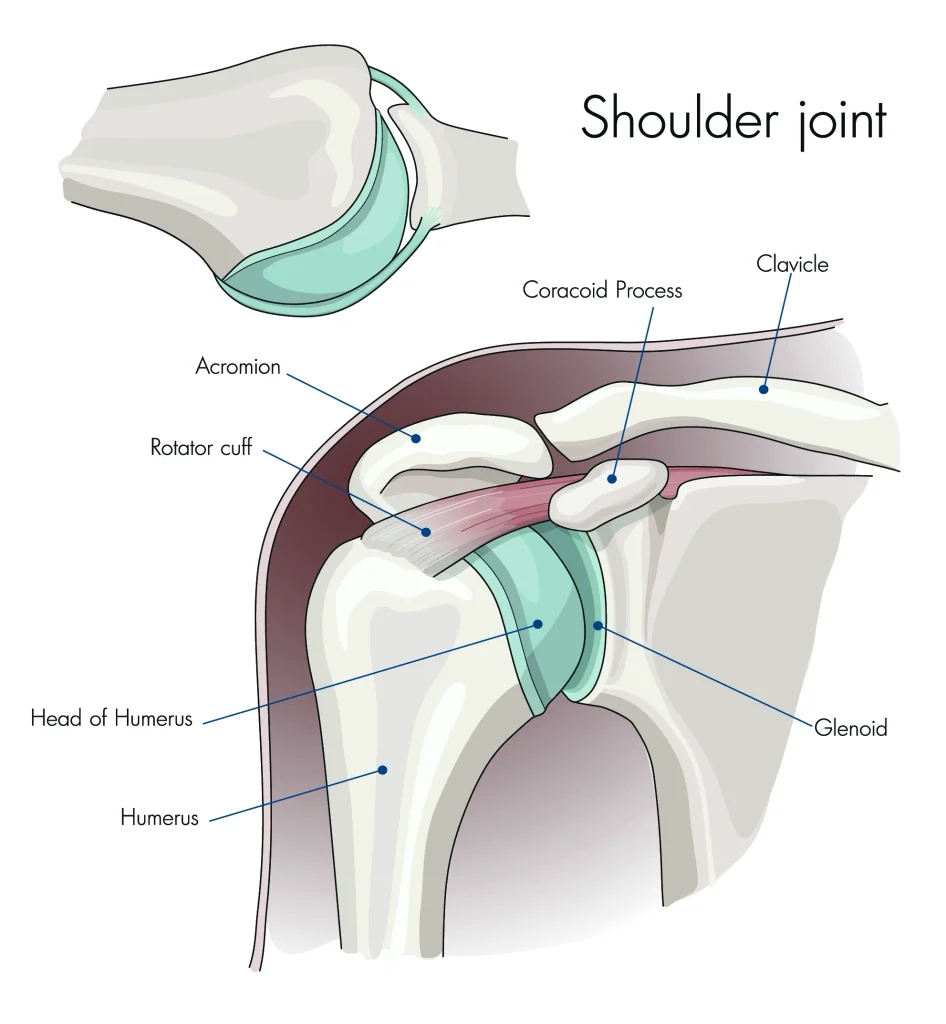
What surprises some patients is how much day-to-day mechanical strain the shoulder absorbs without complaint. Reaching for a top shelf, carrying a grocery bag on one side, sleeping in an awkward position, these are all minor stresses the joint usually handles fine. Pain from that kind of routine use tends to settle down quickly once the aggravating activity is dialed back for a few days. Weekend warriors, in particular, tend to feel this after suddenly ramping up an activity their shoulder is not used to, whether that is tennis, painting a ceiling, or a home improvement project.
The signs below are different. They tend to point toward something more significant, and they deserve a closer look rather than a few more weeks of waiting.
1. Sudden Weakness or Inability to Lift the Arm
A sudden inability to lift the arm, especially after a fall, a heavy lifting attempt, or an awkward movement, is one of the signs I take most seriously. This pattern may point toward a significant rotator cuff injury such as a tear, and the sooner it is evaluated, the more treatment options tend to remain available. I would rather see a patient the same week this happens than have them wait, hoping the weakness resolves on its own. A strain can also cause temporary weakness, but it usually improves within days, not persists unchanged for a week or more.
2. Night Pain That Won’t Let You Sleep
Pain that consistently wakes someone from sleep, or makes it impossible to find a comfortable position, tends to signal more than simple overuse. In my experience, this pattern may point toward shoulder arthritis, a rotator cuff problem, or inflammation inside the joint. Occasional discomfort at night is common with minor strains, but pain that reliably interrupts sleep night after night is worth having examined. I ask about this specifically at every visit, since patients sometimes mention it only in passing without realizing how much it tells me.
3. Visible Deformity or a Shoulder That Looks Out of Place
If the shoulder looks visibly different than usual, sits lower than the other side, or appears to be out of its normal position after an injury, that is not something to monitor at home. This can indicate a shoulder dislocation or a fracture, both of which need prompt evaluation and, in many cases, urgent treatment to protect the joint and surrounding nerves. Numbness or tingling down the arm alongside a visible change in shape raises the urgency further, since it can point to nerve involvement.
4. Pain Combined With Fever, Redness, or Warmth
Shoulder pain paired with fever, redness, or noticeable warmth over the joint is a combination I always want to know about right away. This pattern can point toward an infection in the joint, which is uncommon but needs prompt medical attention when it does occur. I would rather rule this out quickly than have a patient wait through what could be a fast-moving problem. This combination is one of the few on this list where I would suggest same-day care rather than scheduling a routine visit.
5. Pain That Persists or Worsens Despite Rest
Pain that does not meaningfully improve after several weeks of rest and activity modification, or that continues to get worse instead of better, has moved past the window where a strain typically resolves on its own. At that point, I want imaging and an exam to understand what is actually going on, whether that turns out to be a labral tear, a partial rotator cuff tear, early arthritis, or something else. Waiting significantly longer than this rarely helps and can occasionally allow a smaller problem to become a larger one.
What I See in My Patients
A recurring pattern I notice across my Paramus, Franklin Lakes, and Montvale offices is patients waiting through one or more of these signs, hoping the shoulder will settle down on its own. Sometimes it does. More often, by the time they come in, what started as a manageable issue has become a bigger one, either because a small tear has progressed or because compensating for the pain has caused problems elsewhere in the shoulder. I would much rather see someone early and tell them their pain is nothing serious than see them months later after avoidable delay has narrowed their options.
My Approach to Treatment
When a patient comes in with any of these five signs, my first step is always a focused exam paired with X-rays, and in many cases an MRI, to get a clear picture of what is actually happening inside the joint. From there, the plan depends entirely on what we find. A partial rotator cuff tear might respond well to therapy and time, while a full tear or an infection calls for a very different, more urgent conversation. I do not believe in defaulting to imaging for every ache, but when one of these red flags is present, I would rather have the information up front than guess.
I also try to give patients a realistic sense of urgency rather than either extreme. Not every sign on this list means surgery is coming, and I would rather a patient come in for a same-week evaluation that turns out reassuring than skip it and be right, but only by luck.
Summary
Most shoulder pain resolves with rest and time, and I do not want anyone rushing into an appointment over every minor ache. But sudden weakness, night pain that will not let up, visible deformity, fever or warmth around the joint, and pain that persists despite rest are five signs your shoulder pain is serious enough to warrant a closer look. If any of these sound familiar, do not wait out the next few weeks guessing. Schedule an evaluation so we can determine exactly what is going on and get you a clear plan, whether that means reassurance and a home program or something more involved.
Frequently Asked Questions
How do I know if my shoulder pain is just a strain or something more serious?
Strains typically improve within days to weeks with rest and simple care. Pain that persists beyond that, or comes with any of the five warning signs above, is worth having examined.
Should I go to the emergency room for shoulder pain?
Visible deformity after an injury, an inability to move the arm at all, or pain combined with fever generally warrant urgent evaluation. Less severe symptoms can usually wait for an office visit within a few days.
Will I definitely need an MRI if I have one of these signs?
Not always. X-rays and a physical exam often provide enough information to guide the next step, and I reserve MRI for cases where more detail is genuinely needed to confirm what is going on.
What if my shoulder pain does not match any of these five signs, but I am still worried?
A brief evaluation is still worthwhile if something feels off to you. These five signs cover the most common red flags I see, but they are not the only reason to have a shoulder checked.