
SHOULDER | PARAMUS, FRANKLIN LAKES & MONTVALE
Reverse Shoulder Replacement in Bergen County, NJ
When the rotator cuff is torn beyond repair, a reverse shoulder replacement can restore the ability to raise your arm. Dr. Eitan Kohan performs reverse replacement in Paramus, Franklin Lakes, and Montvale.
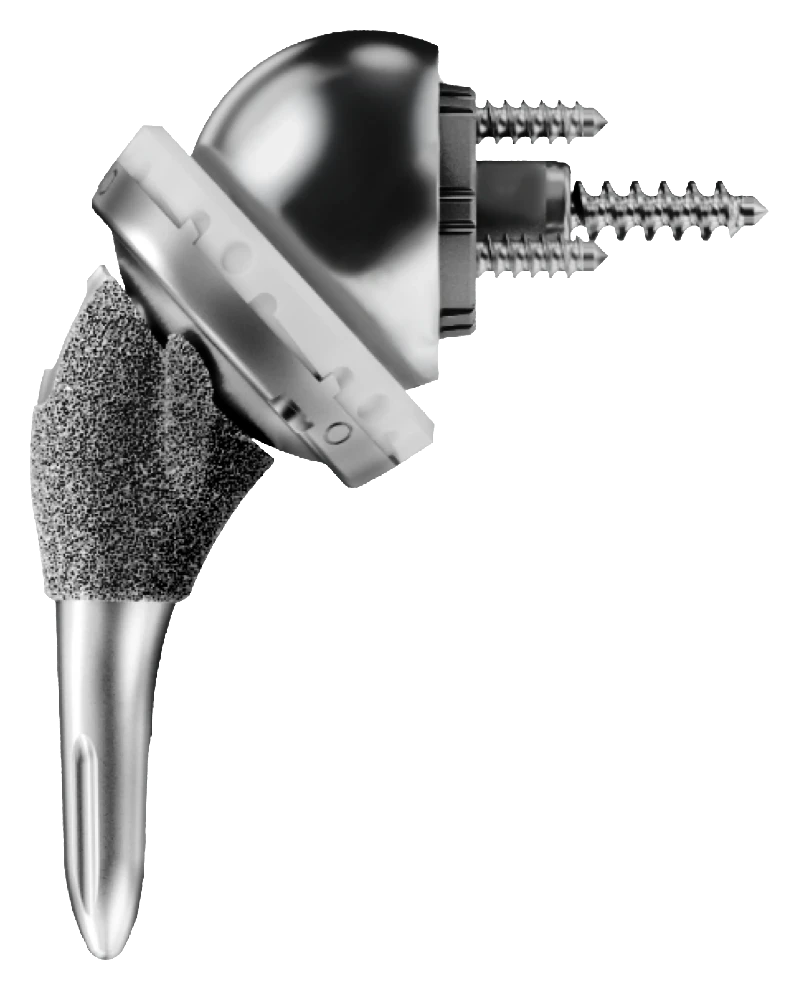
When a Standard Replacement Isn't Enough
Reverse shoulder replacement is designed for patients who describe problems like these:
Can't Raise the Arm
You can shrug, but lifting the arm away from your body or overhead is impossible, even though the pain is manageable.
A Cuff Tear That Was Never Fixed
A rotator cuff tear years ago, never repaired or repaired unsuccessfully, has left the shoulder weak and now arthritic.
A Fracture That Won't Hold
A broken upper arm bone in an older adult where plates and screws are unlikely to give a dependable result.
A shoulder replacement that works without the rotator cuff
A standard shoulder replacement depends on the rotator cuff to lift and steady the arm. When those tendons are torn beyond repair, or have been gone so long that arthritis has set in, an anatomic replacement tends to fail. Reverse shoulder replacement was designed for exactly this situation.
In a reverse replacement, the ball is placed on the shoulder blade side and the socket on the upper arm side. That change moves the center of rotation. The deltoid, the large muscle over the top of the shoulder, can then raise the arm on its own. The goal is to restore the ability to raise the arm.
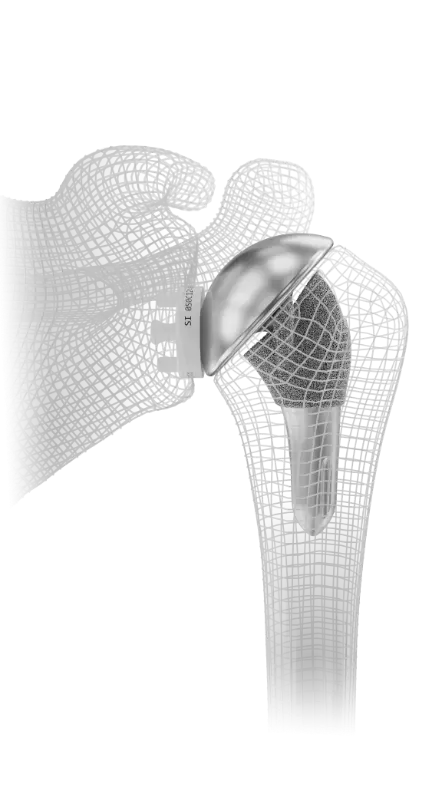
Anatomic replacement. The ball and socket keep their normal positions.
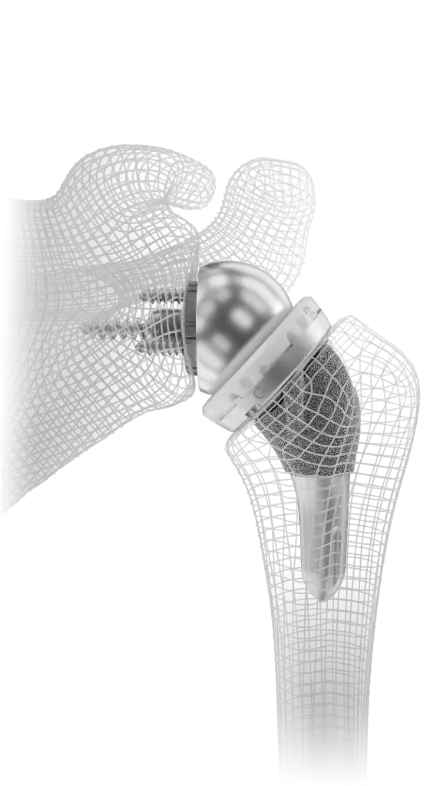
Reverse replacement. The ball and socket switch sides.
Conditions treated with reverse replacement
- Rotator cuff tear arthropathy (arthritis that develops after a chronic massive cuff tear)
- Massive, irreparable rotator cuff tears with loss of motion, even without arthritis
- Complex proximal humerus fractures, especially in patients over 65
- Failed prior anatomic shoulder replacement
- Severe glenoid bone loss or deformity where an anatomic socket cannot be securely fixed
- Some cases of inflammatory arthritis
How Dr. Kohan decides between anatomic and reverse
The decision comes down to the rotator cuff and the bone. Dr. Kohan evaluates cuff integrity on MRI and examination, glenoid bone quality on CT when needed, and your functional goals. Patients with an intact cuff and good bone are usually better served by an anatomic replacement, which preserves more natural mechanics. Patients without a working cuff do better with a reverse. He explains the reasoning and the trade-offs of each so the choice is made together.
The InSet® Reverse
Dr. Kohan uses the InSet® Reverse system from Shoulder Innovations. Its design is intended to seat the glenoid component within the bone and to position the joint in a way that supports range of motion and stability. Whether this implant is right for you depends on your anatomy and is part of the surgical planning discussion.
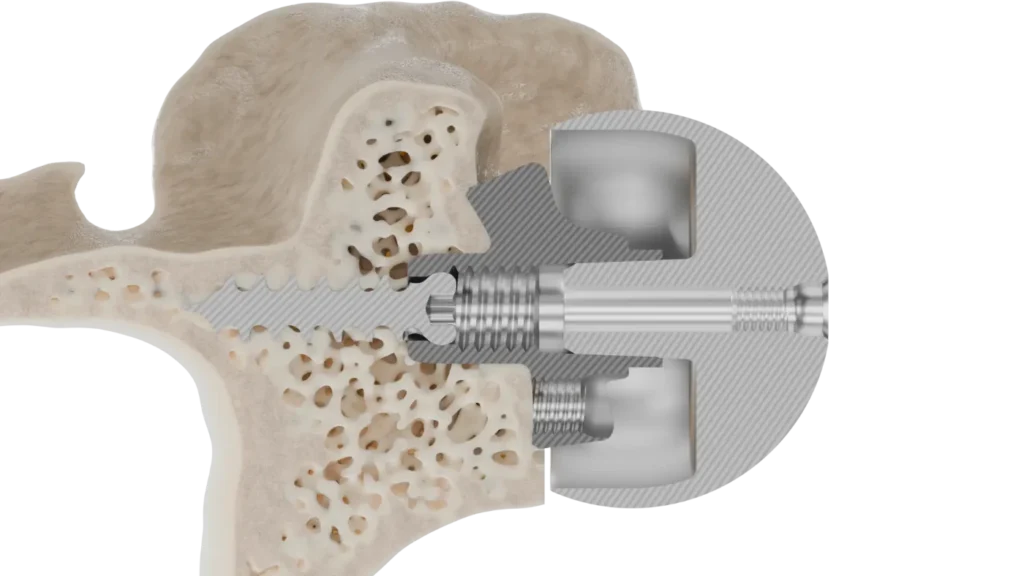
The InSet® Reverse glenosphere and baseplate, shown in cross-section, sit within the bone of the socket.
Planning your surgery in 3D with ProVoyance®
Where the implant sits in the bone matters. For many patients, Dr. Kohan loads a CT scan into ProVoyance® Shoulder planning software from Shoulder Innovations. The software builds a 3D model of your shoulder.
Working on that model, he chooses the implant size and plans its angle and depth before the day of surgery.
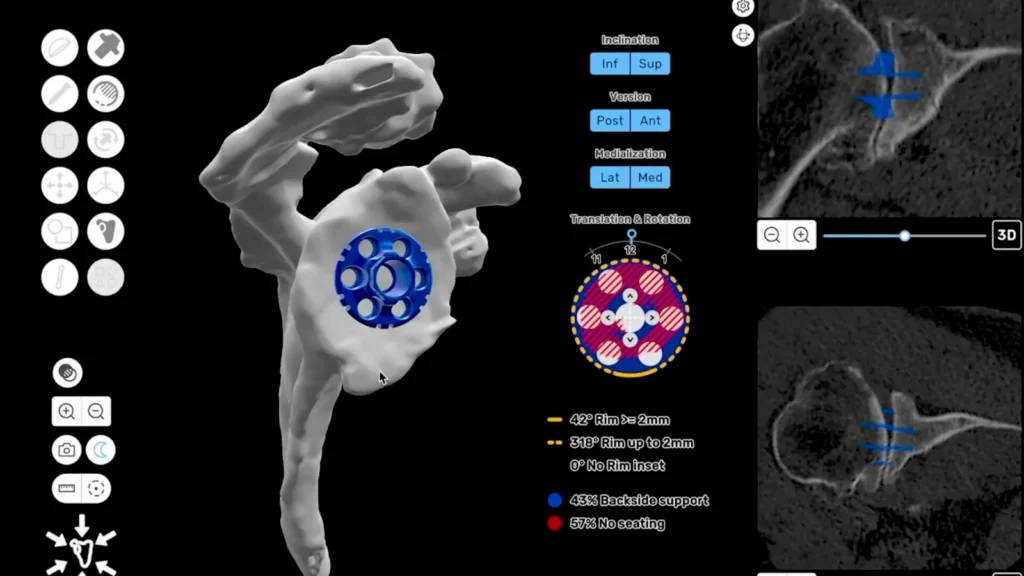
A ProVoyance® plan shows the shoulder in 3D beside the CT scan.
Recovery after reverse shoulder replacement
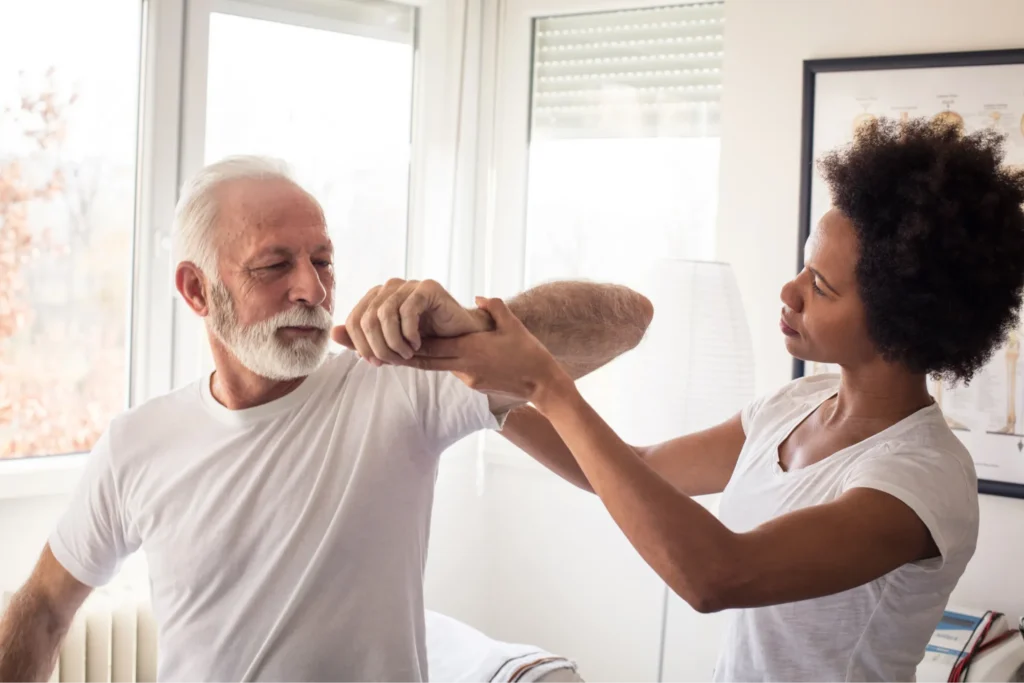
Recovery is often somewhat faster than after anatomic replacement because there is no rotator cuff repair to protect. A sling is used for the first few weeks, with early gentle motion. Physical therapy focuses on retraining the deltoid. Pain relief and motion typically improve over several months.
Reverse replacement does have limits. Internal rotation, the motion used to reach behind the back, may remain restricted, and heavy overhead lifting is discouraged long term. Dr. Kohan reviews realistic expectations before surgery.
Fellowship-trained reverse shoulder surgeon in Paramus
Dr. Kohan is an orthopedic surgeon with fellowship training in shoulder and elbow surgery (Rothman Institute, Thomas Jefferson University Hospital). He completed his orthopaedic surgery residency at Washington University in St. Louis and is an Assistant Professor of Orthopedic Surgery at the Hackensack Meridian School of Medicine. He is an Active Fellow of the American Academy of Orthopaedic Surgeons and an Associate Member of the American Shoulder and Elbow Surgeons.
Reverse shoulder replacement is a technically demanding procedure where surgeon experience and implant positioning matter. Dr. Kohan performs it regularly for patients from Paramus, Ridgewood, Franklin Lakes, Montvale, Hackensack, and throughout Bergen and Passaic counties.
WHY PATIENTS CHOOSE DR. KOHAN
Fellowship-trained care, close to home
Fellowship-Trained Specialist
Advanced training focused entirely on the shoulder and elbow at the Rothman Institute. Active Fellow of the AAOS and Associate Member of the American Shoulder and Elbow Surgeons.
Surgical and Non-Surgical Options
Dr. Kohan takes time to understand your goals. Your treatment plan may include non-surgical care, arthroscopy, or open surgery.
Three Bergen County Offices
Paramus, Franklin Lakes, and Montvale, New Jersey. Monday through Friday, 8am to 4pm. Call (201) 639-6620 or request an appointment online.
Hear from an InSet® shoulder replacement patient
Carolyn, a retired nurse, describes her experience with both an anatomic and a reverse shoulder replacement with the InSet® system in this short video from Shoulder Innovations. Individual results vary.

Take the Next Step
Dr. Kohan takes time to understand your goals and builds a treatment plan that fits your needs. Offices in Paramus, Franklin Lakes, and Montvale, NJ.
Prefer to call? (201) 639-6620, Monday through Friday, 8:00 AM to 4:00 PM.